

I’ve been making shrimp arrabbiata on a hot summer evening for years, and it’s my go-to when I want chewy pasta tossed in a fiery tomato sauce loaded with garlic, fresh basil, and just the right kick.
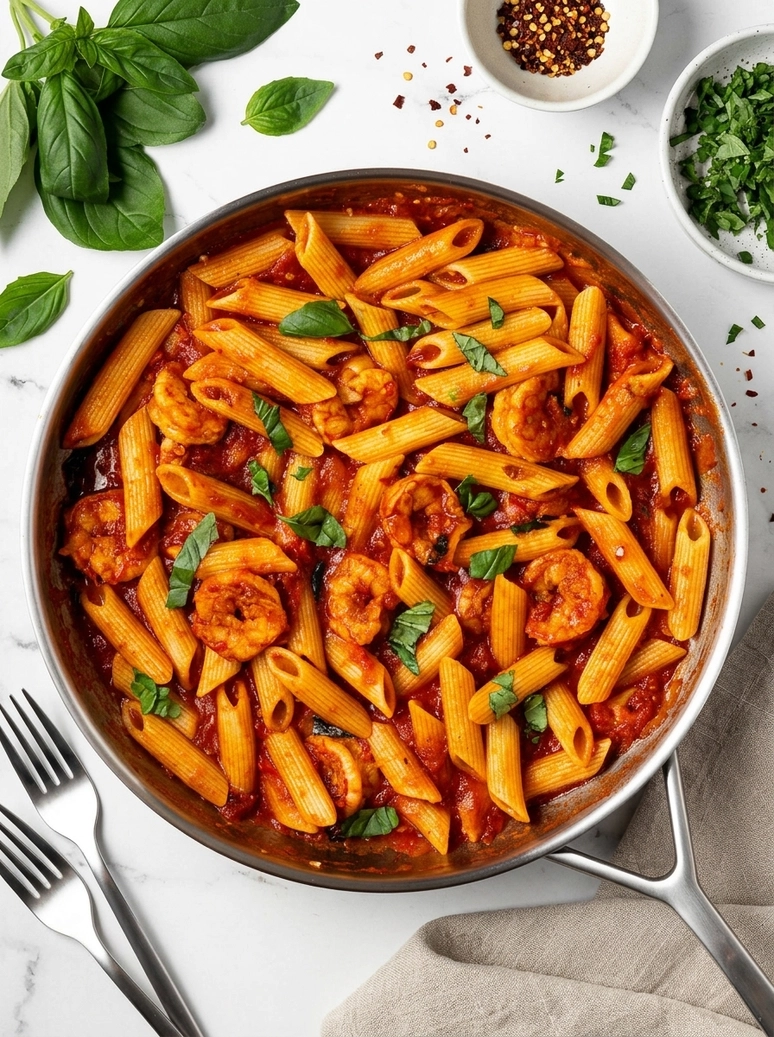
I used to overcook shrimp until rubbery on a busy weeknight, so I switched to canned whole tomatoes and jumbo shrimp that won’t get tough. I sneak in baby spinach when I need a quick veggie boost.
Because the shrimp only need about three minutes per side and the sauce simmers for 15 minutes, you’re digging in within half an hour. I always save a splash of pasta water so the sauce clings and the kitchen fills with garlic scent.
Why You Will Love This Recipe
- Adjustable Spice Level The red pepper flakes and cayenne let you dial the heat; using two teaspoons still keeps the sauce bright and tomato-forward.
- Fast Seafood Sear Jumbo shrimp cook in about three minutes per side, staying tender; you can simmer the sauce while the pasta boils to save time.
- Sauce That Sticks A splash of pasta water thickens the sauce so it clings to each penne or strand, giving every bite a spicy, tangy coating.
- Make-Ahead Sauce The arrabbiata holds well in the fridge for up to three days, and you can quickly warm it and cook fresh pasta whenever dinner calls.
Ingredient Notes
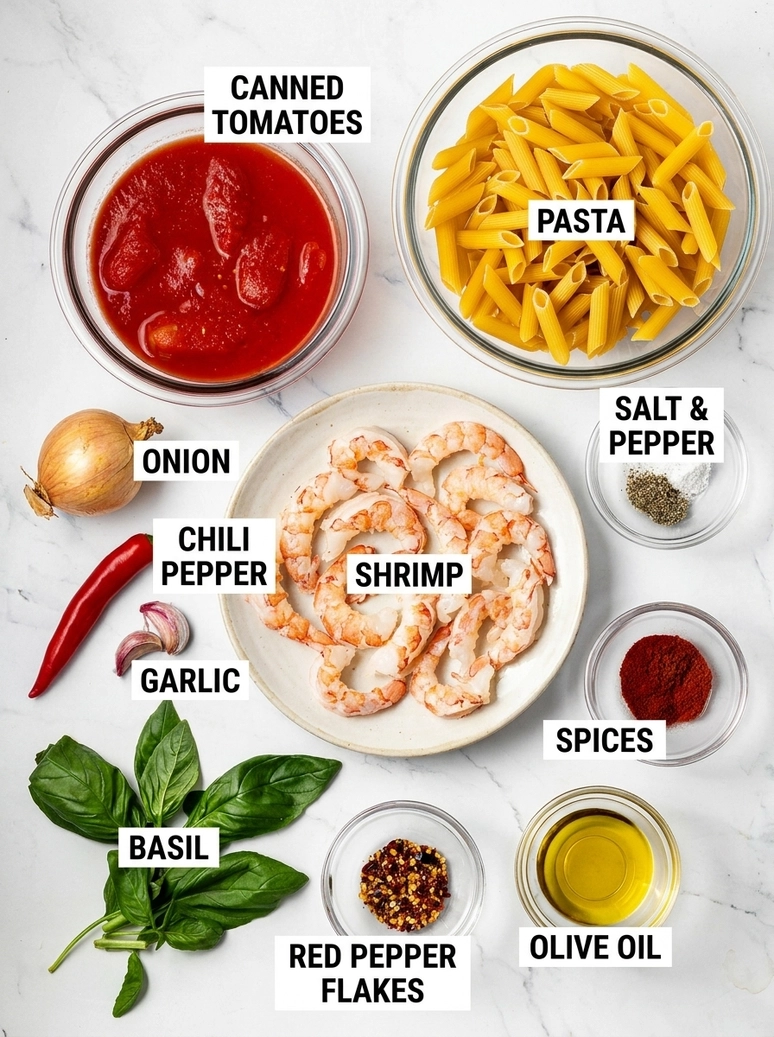
- Shrimp: I pick jumbo peeled-deveined shrimp thawed in cold water; they stay juicy and resist overcook. Medium shrimp work too.
- Pasta: Penne holds the sauce in its ridges, but I’ll use spaghetti or linguine if that’s what’s in my pantry.
- Canned whole San Marzano tomatoes: I grab Mutti or similar brand; they’re sweeter, less watery. Crush with a fork for chunky sauce.
- Yellow onion: Choose a firm bulb; dice it fine so it softens quickly and blends into the sauce without big bits.
- Garlic cloves: Look for firm, plump cloves; mince just before cooking so they don’t dry out or lose aroma.
- Fresh basil leaves: Pick bright green leaves; tear them toward the end so they stay vibrant. Parsley works if you’re out.
Find the printable recipe with measurements below.
Keep scrolling to the recipe card below for the full printable recipe!
Recipe Tips
- When adding the 2 14-ounce cans of tomatoes, use whole peeled San Marzano tomatoes to avoid watery or acidic sauce
- If sauce tastes too acidic while simmering 15 minutes, stir in sugar to cut harsh acidity
- When draining pasta after cooking to al dente, reserve some pasta water before discarding water to help thicken sauce
- If you prefer milder heat during sautéing, reduce 2 teaspoons of red pepper flakes to taste
- When freezing leftovers, remove cooked pasta before freezing sauce to avoid mushy noodles when reheated
Serving Suggestions
- Pair shrimp arrabbiata with bruschetta topped with tomato, garlic and basil. Serve alongside caprese salad of mozzarella, tomato and basil with olive oil.
- Mix romaine lettuce, cherry tomatoes and cucumber with balsamic vinaigrette. Scatter pine nuts and parmesan over salad. Set salad next to pasta.
Storage Guidelines
- Refrigeration: airtight container at 4°C for up to 3 days. Reheat gently in skillet or microwave until hot.
- Freezing Sauce: freezer-safe container at -18°C for up to 3 months. Thaw overnight at 4°C before reheating. Cook pasta fresh.
- Freezing Complete Dish: freezer bag at -18°C for up to 3 months. Thaw overnight at 4°C. Warm gently in skillet or microwave; expect softer pasta.
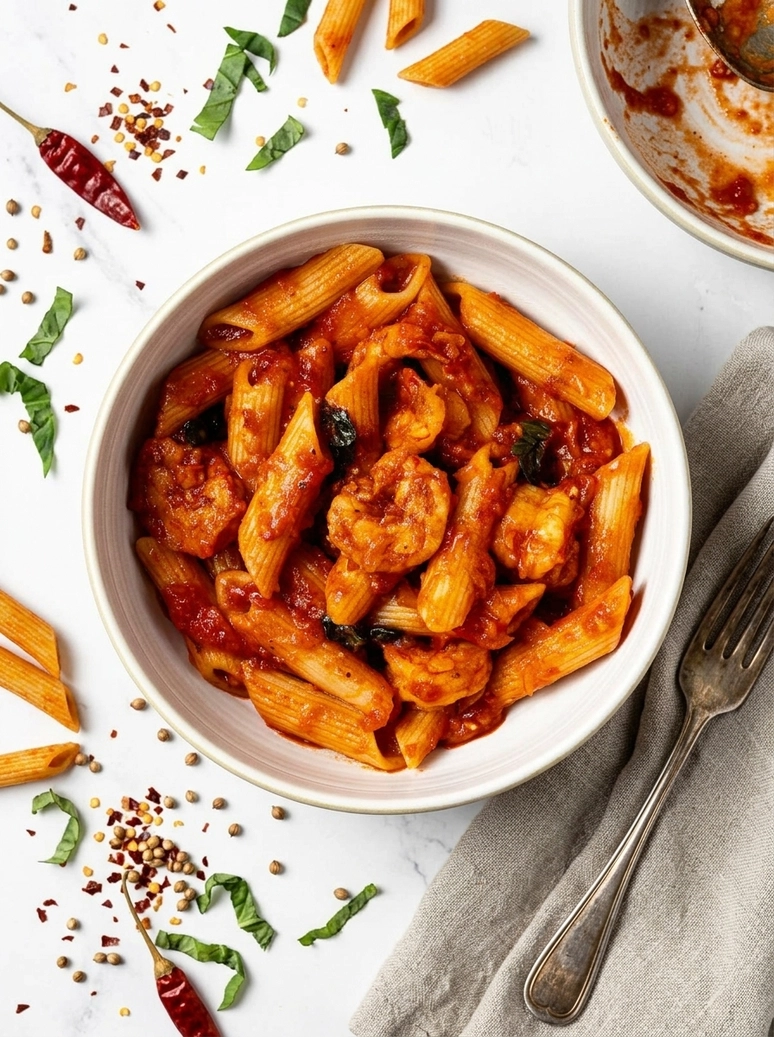
Did you make this recipe? Scroll down to leave a star rating and review!
Shrimp Arrabbiata
Ingredients
- 1 pound shrimp peeled and deveined
- 1 tablespoon extra virgin olive oil for marinating the shrimp
- 1 ½ teaspoon paprika powder
- ¼ teaspoon cayenne pepper
- salt to taste
- black pepper to taste
- 1 tablespoon extra virgin olive oil for cooking the shrimp
- 2 tablespoons extra virgin olive oil
- ½ yellow onion finely diced
- 2 cloves garlic minced
- 1 chili pepper diced
- 2 teaspoons red pepper flakes more to taste
- 2 14-ounce cans peeled and whole San Marzano tomatoes use the tomatoes and juices
- salt to taste
- 12 ounces pasta of your choice
- pasta water as needed
- ⅓ cup fresh basil leaves cut into large pieces
Instructions
- In a bowl, place the shrimp and drizzle with 1 tablespoon of olive oil. Sprinkle paprika powder, cayenne pepper, salt, and pepper over them and toss until each shrimp is coated and ready for cooking.
- Heat 1 tablespoon of olive oil in a large pan over medium heat. Once the oil shimmers, add the shrimp and sear for about 1–2 minutes per side until they turn pink and opaque. Transfer the shrimp to a plate to keep from overcooking.
- In the same pan, add 2 tablespoons of olive oil and the diced onion. Cook over medium heat until the onion begins to soften, about 3–4 minutes. Stir in garlic, chili pepper, and red pepper flakes and cook until fragrant, around 1 minute.
- Pour in the canned tomatoes with their juices and bring to a gentle simmer. Use a fork to break the tomatoes into chunks, season with salt and pepper, then cover and let the sauce cook for 15 minutes so flavors meld.
- Meanwhile, bring a pot of salted water to a boil and add your pasta. Cook until it’s al dente, then scoop out a cup of pasta water before draining. This starchy water will help thicken the sauce.
- Return the pan to low heat and stir in the basil leaves along with a splash of the reserved pasta water. Let the sauce simmer for 5 minutes so it thickens slightly and the flavors come together.
- Add the cooked pasta and shrimp back into the pan, tossing until everything is coated in the sauce. Dish out onto plates and garnish with grated parmesan and extra basil leaves before serving.
Notes
- When adding the 2 14-ounce cans of tomatoes, use whole peeled San Marzano tomatoes to avoid watery or acidic sauce
- If sauce tastes too acidic while simmering 15 minutes, stir in sugar to cut harsh acidity
- When draining pasta after cooking to al dente, reserve some pasta water before discarding water to help thicken sauce
- If you prefer milder heat during sautéing, reduce 2 teaspoons of red pepper flakes to taste
- When freezing leftovers, remove cooked pasta before freezing sauce to avoid mushy noodles when reheated
Leave a Reply